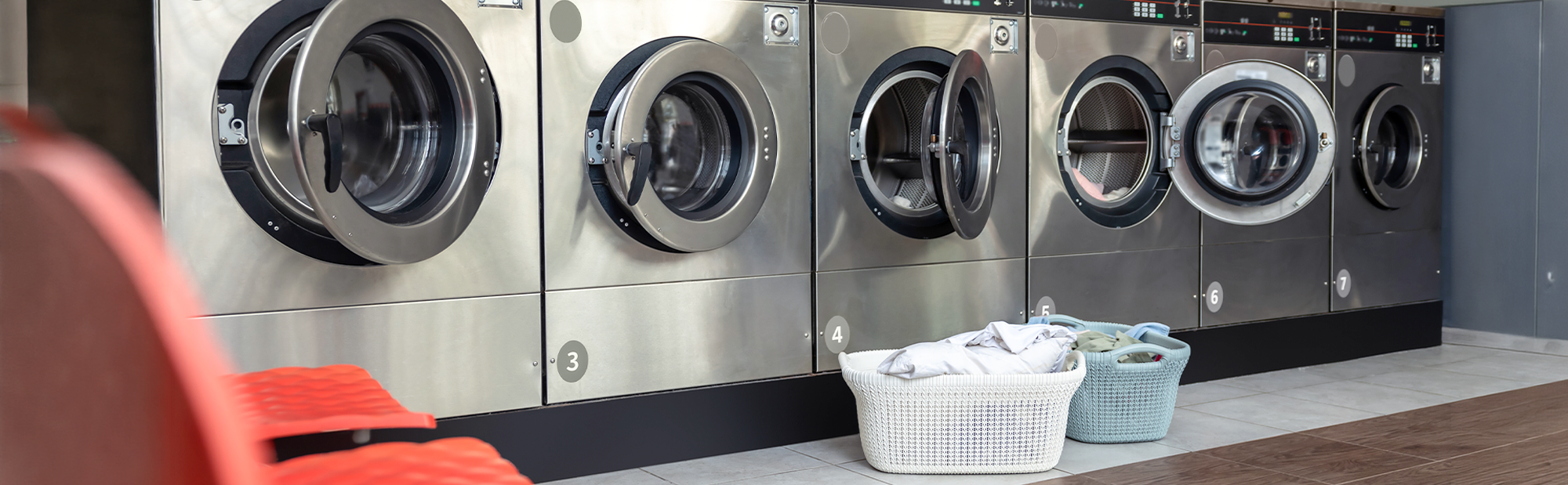
Most institutions start looking for a new campus laundry provider because something specific has gone wrong, not because an agreement happened to reach its end date. Two dryers in the same residence hall have been out since the start of the semester. The housing office is fielding the same complaint every week and nobody can say whether the machines are genuinely failing or whether the room is just full at nine on a Sunday evening. At FMB Laundry, that is where most of our campus conversations start.
That is worth writing down before anyone talks to a vendor. Proposals are easy to read and hard to compare, and a short list of the problems you already have is the thing that keeps them honest.
Before You Shortlist a Campus Laundry Provider
If the real issue is that students cannot find a free washer at the hours they want one, then machine count and a way for residents to see availability matter more than the headline per-cycle rate. If the real issue is that a repair takes two weeks, service structure is the entire decision and everything else is detail.
Walk the campus laundry rooms first, with whoever hears the complaints. Count the machines, note which ones are out, and find out how long they have been out. A provider cannot design a program around a problem nobody has described, and a selection committee that has not agreed on the problem will pick on price by default.
Who Fixes the Machines, and How Fast
This separates providers more reliably than anything else on a proposal, and it is the question most likely to get a general answer. Ask who actually turns up when a machine fails: technicians employed by the provider, or sub-contractors hired job by job. We don’t use sub-contractors, and the reason that matters is accountability. A sub-contracted technician answers to their own schedule rather than to your agreement.
Then ask whether those technicians are factory-trained on the specific equipment being installed, rather than generally experienced with commercial laundry. Ask how a fault gets reported, whether a student can raise it directly or whether it has to come through your staff, and what the campus hears back once the call is closed. A provider who can resolve some issues the same day is useful. A provider who cannot tell you what happened to last month’s service requests is a provider you will be chasing.
Ask about monitoring while you are there. Remote laundry room monitoring means a machine behaving oddly can be seen before a resident reports it, which quietly removes a category of complaint from the housing office rather than just routing it faster.
One more thing worth putting in writing: the escalation path when a room has been down for more than a day. Most agreements describe normal service well and say very little about the bad week.
What Equipment Are You Actually Getting
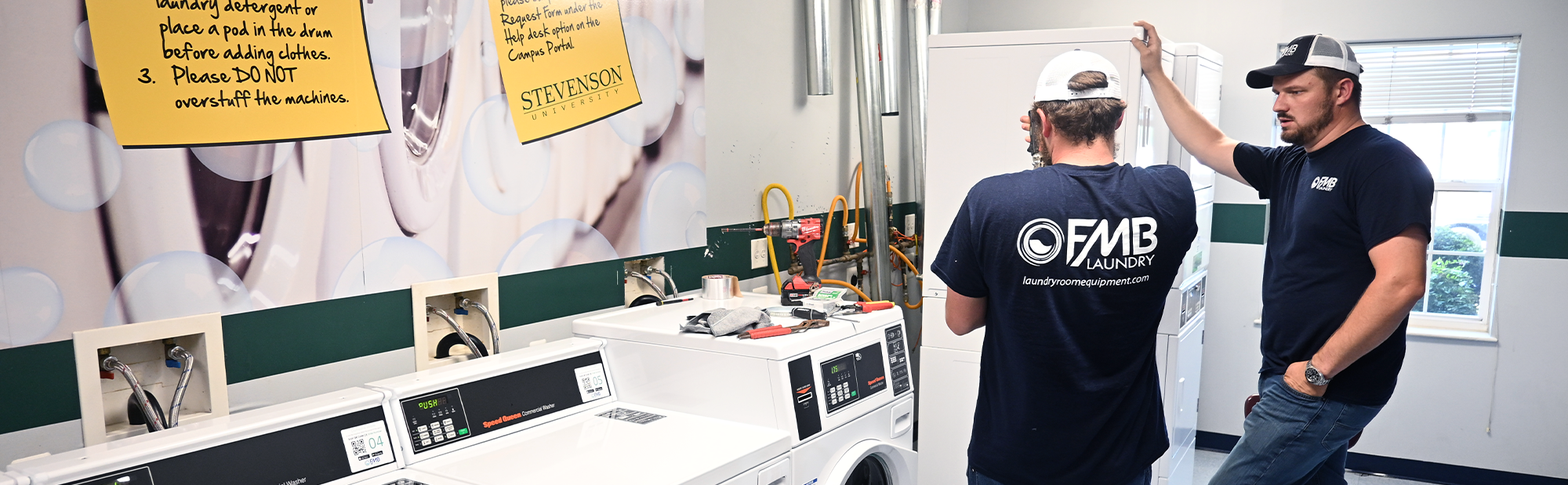
Proposals list models. What you need is the reasoning behind the count. Ask how many residents the provider has planned per machine, and ask specifically how they handled peak demand, because the evening and Sunday crush is what decides whether a room feels adequate. A room sized on available floor space rather than on the number of people using it will be short every term.
Ask which brands and ask why those. Our campus rooms run Speed Queen and Wascomat equipment, and either way the question to press is what the provider can tell you about parts availability and the service history of the machines they are proposing.
Ask whether the machines are ENERGY STAR rated. Water, sewer, and energy usually sit on the institution’s side of the agreement, so equipment choice moves bills that the provider never sees. Ask about ADA-compliant machines, and ask separately about the room layout, because an accessible machine in a room nobody can maneuver in is not an accessible room.
Ask too whether the provider will purchase the machines you already own and take over management of the rooms. Not everyone offers it, and it changes the shape of a transition considerably.
How Residents Pay, and What Your Team Can See
Payment is where resident satisfaction is usually won or lost, and it tends to get discussed last. Ask what the options are: a mobile app, a laundry card, or paying at the machine. Our rooms can run Clothesline Mobile, laundry card systems, and Ultra Pay at the machine, and the right answer depends on the campus rather than on the technology. An institution already running a campus card may want laundry on it. An institution without one rarely wants to start.
Ask whether payments are PCI DSS compliant. It is a short question with a yes or no answer, and it is worth having the answer in writing rather than in a meeting.
Then ask what your own team can see. Clothesline QuickView shows machine availability and cycle times, and notifications tell a resident when a load is finished. A large share of the laundry traffic into a housing office is somebody asking whether a machine is free, so visibility is not a convenience feature. Ask what reporting the institution receives, how often it arrives, and who owns the usage data once the agreement ends.

What the Contract Puts on the Institution
Read the responsibilities split before the pricing. The useful question is not what the program costs, it is what the proposal covers and what gets billed to you separately afterward. Utilities, plumbing, venting, room repairs, and vandalism are the usual lines, and providers divide them differently enough that two proposals at the same headline rate are not the same deal.
Ask about renewal and notice dates, then put them in a calendar the day you sign. Agreements that roll over quietly are the most common reason a campus ends up another term into a provider it would not choose again. Ask whether equipment can be added mid-term, because occupancy changes and a fixed machine count across a long agreement is a problem on a delay.
Term length is usually tied to how much equipment is being installed, since the machines are the provider’s investment rather than yours. That is reasonable on its face. What matters more than the number of years is what the term allows you to do inside it. If you already hold a contract or a competing proposal and want a second read on the terms, a laundry analysis is a low-commitment way to get one.
What Happens During the Changeover
Ask for the transition plan in writing, with dates on it. Pulling old machines out of an occupied residence hall and getting new ones in is a logistics problem, and a provider who has done it well will tell you exactly how they phase it so that no building loses laundry for long. Ask when they expect to do the work, because the answer should be shaped around the academic calendar rather than around their own.
Ask who tells the students. A changeover nobody announced produces a week of confused residents and a spike in complaints that has nothing to do with the equipment. Ask what signage, instructions, and app onboarding come with it, and ask whether someone from the provider is on site for the first few days of a new campus program.
Mistakes That Only Show Up a Year In
The common one is deciding on the per-cycle rate alone. It is the most visible number and the easiest to compare, so it draws attention away from the service terms that determine whether the rooms actually work.
The second is treating the payment and monitoring technology as a bonus feature rather than as part of the operation. Your staff will touch it every week, and so will every resident.
The third is skipping references from campuses of a similar size and building age. A provider used to new construction and a provider used to 1960s residence halls with original plumbing are solving different problems, and both will tell you they handle campus work.
Get a Read on the Program You Have Now
If you are at the start of this and not sure what you are comparing against, the simplest first step is to have your current rooms looked at. We offer a free laundry analysis: send over your current contract or proposal along with your property details, and we’ll go through it and come back with what we would recommend. There is no obligation attached.
FMB Laundry has been running commercial laundry rooms since 1987, and we serve 11 states and the District of Columbia. If you would like to talk through what a campus program would look like across your buildings, send us the details and we’ll take it from there.
Frequently Asked Questions
How much does a campus laundry program cost?
Cost depends on the program structure, the condition of the rooms, who carries the utilities, the equipment scope, the payment model, and the length of the agreement. Ask every provider for a written financial proposal that separates what they cover from what the institution covers, so the proposals can be compared line by line rather than on a single rate.
Should a campus laundry program be vended or non-vended?
A vended program charges residents per cycle. A non-vended program folds laundry into housing fees so the machines run free at the point of use. Non-vended removes payment friction and a whole category of complaint, while vended keeps the cost attached to the people using the rooms. Ask whether a provider supports both, because the answer tells you how flexible the agreement will be if the model needs to change later.
What should a campus ask about equipment service?
Ask who performs the work, whether the technicians are employed by the provider or sub-contracted, and whether they are factory-trained on the equipment being installed. Ask how a service request is raised, how the campus is told what happened, and what the escalation path is when a room has been down for more than a day.
How long should a campus laundry agreement run?
Term length is usually tied to how much equipment the provider is installing, since the machines are their investment. The term itself matters less than what it allows. Ask what triggers a renewal, how much notice is needed to leave, whether equipment can be added mid-term as housing changes, and what happens to the machines at the end of the agreement.